
-

New insight from the CQF Institute, a worldwide network for quantitative finance professionals (quants), reveals that fewer than one in ten specialists believe new graduates possess the AI and machine learning skills necessary to succeed in the industry. This highlights a growing issue in quantitative finance: a lack of human understanding and fluency in the…
-

In its pursuit of a direct-to-consumer (DTC) first business model, Levi Strauss is weaving AI and cloud platforms into its core operations. The nearly 175-year-old apparel company is leveraging Microsoft technologies to modernise its consumer experiences and improve internal productivity. Levi Strauss’ approach provides a case study for other enterprises in using a unified technology…
-
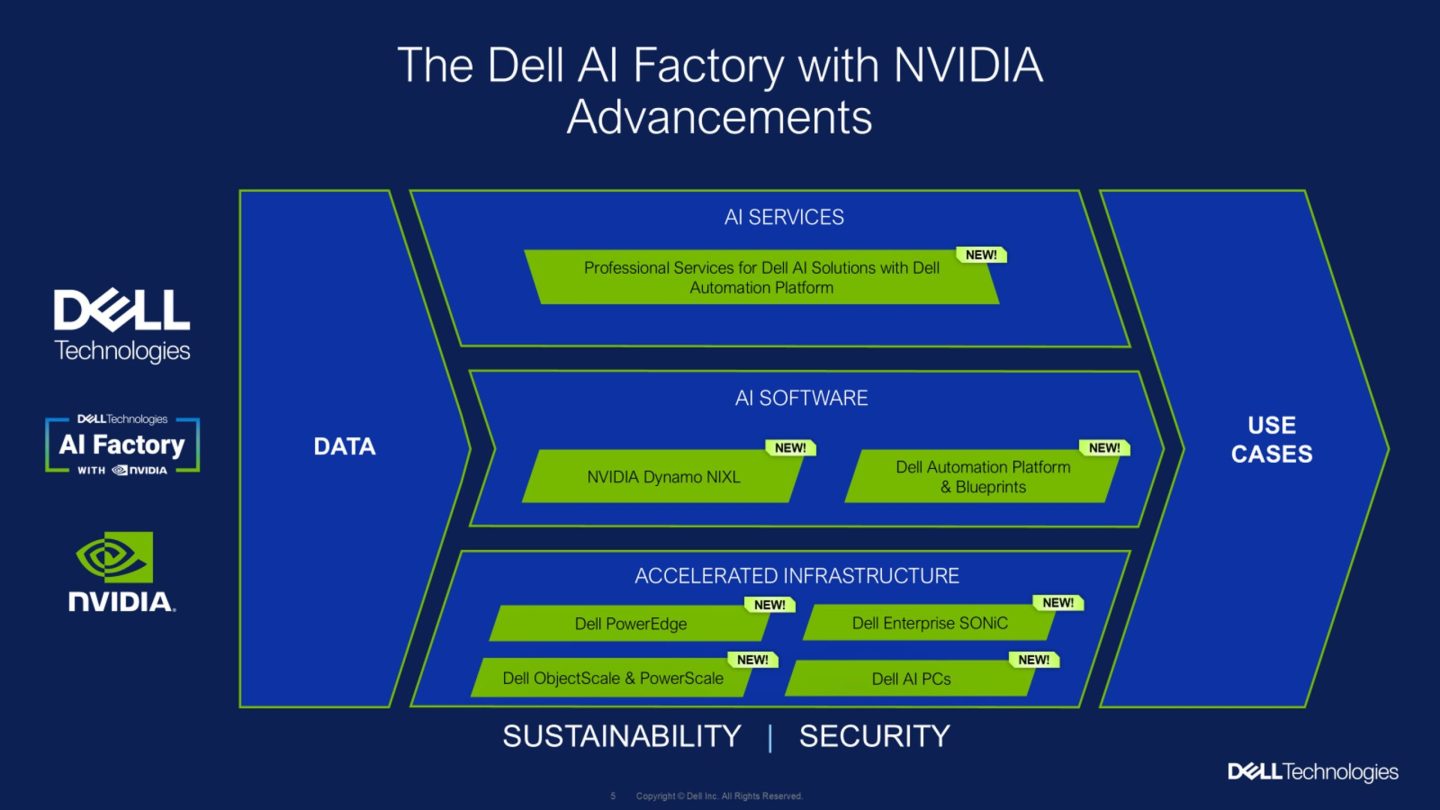
At SC25, Dell Technologies and NVIDIA introduced new updates to their joint AI platform, aiming to make it easier for organisations to run a wider range of AI workloads, from older models to newer agent-style systems. As more companies scale their AI plans, many run into the same issues. They need to manage a growing…
-

A new Bain & Company report says many organisations in Southeast Asia are still stuck in early product testing because they treat AI as a set of tools rather than a change in how the business works. In The Southeast Asia CEO’s Guide to AI Transformation, the authors say leaders should first look at how…
-

Over half of us now use AI to search the web, yet the stubbornly low data accuracy of common tools creates new business risks. While generative AI (GenAI) offers undeniable efficiency gains, a new investigation highlights a disparity between user trust and technical accuracy that poses specific risks to corporate compliance, legal standing, and financial…
-

AI engineers often chase performance by scaling up LLM parameters and data, but the trend toward smaller, more efficient, and better-focused models has accelerated. The Phi-4 fine-tuning methodology is the cleanest public example of a training approach that smaller enterprise teams can copy. It shows how a carefully chosen dataset and fine-tuning strategy can make…
-
Author: Olga Zharuk, CPO, Teqblaze When it comes to applying AI in programmatic, two things matter most: performance and data security. I’ve seen too many internal security audits flag third-party AI services as exposure points. Granting third-party AI agents access to proprietary bidstream data introduces unnecessary exposure that many organisations are no longer willing to…
-

Despite new methods emerging, enterprises continue to turn to autonomous coding agents and code generation platforms. The competition to keep developers working on their platforms, coming from tech companies, has also heated up. AWS thinks its offering, Kiro, and new capabilities to ensure behavioral adherence set up a large differentiator in the increasingly crowded coding…
-

When I first wrote “Vector databases: Shiny object syndrome and the case of a missing unicorn” in March 2024, the industry was awash in hype. Vector databases were positioned as the next big thing — a must-have infrastructure layer for the gen AI era. Billions of venture dollars flowed, developers rushed to integrate embeddings into…
-

The race to deploy agentic AI is on. Across the enterprise, systems that can plan, take actions and collaborate across business applications promise unprecedented efficiency. But in the rush to automate, a critical component is being overlooked: Scalable security. We are building a workforce of digital employees without giving them a secure way to log…